Tweet #Represion: Archiving Digital Resistance in Latin America
The project emerged from the social uprisings that erupted across Latin America in late 2019, with mass protests sweeping through Ecuador, Chile, Bolivia, and Colombia. The fear of COVID-19 contagion seemed to suppress these movements when the pandemic reached the region in 2020. However, in Bolivia and Colombia, discontent proved stronger than fear, and people took to the streets even amid the pandemic. In Peru and Paraguay—both of which had experienced institutional crises in 2019—protests exploded in late 2020 and early 2021, respectively.
Colombia's 2021 social uprising, also known as the Paro Nacional (National Strike), began on April 28, 2021, initially sparked by widespread rejection of a tax reform proposed by President Iván Duque's government. The protests quickly expanded to address deeper structural issues: inequality, poverty, youth unemployment, and systemic violence. The government's response through police forces was brutal. In the first six weeks alone, nearly fifty people died—most of them young protesters—along with two state agents. Widespread human rights violations fueled ongoing confrontations, with demonstrators demanding the dismantling of the riot police unit ESMAD (Escuadrón Móvil Antidisturbios) and requesting the presence of the Inter-American Commission on Human Rights (IACHR).
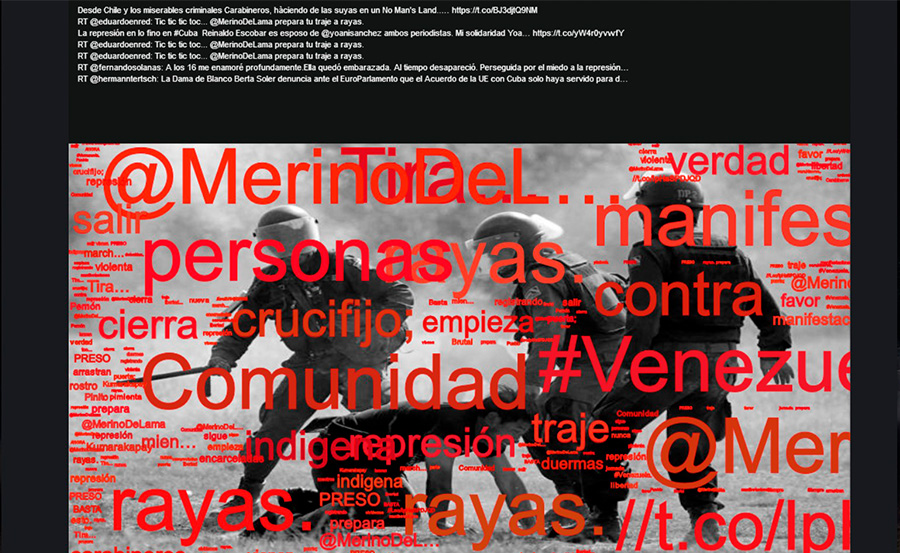
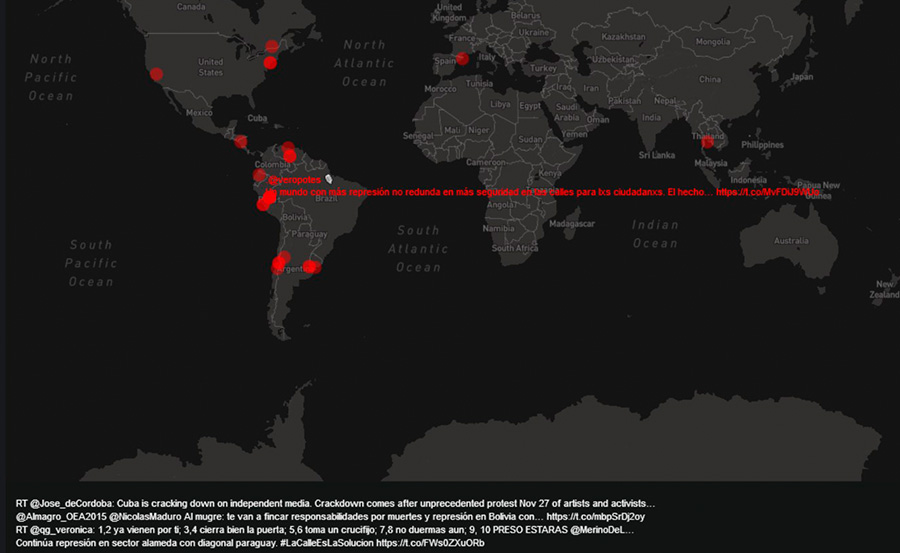
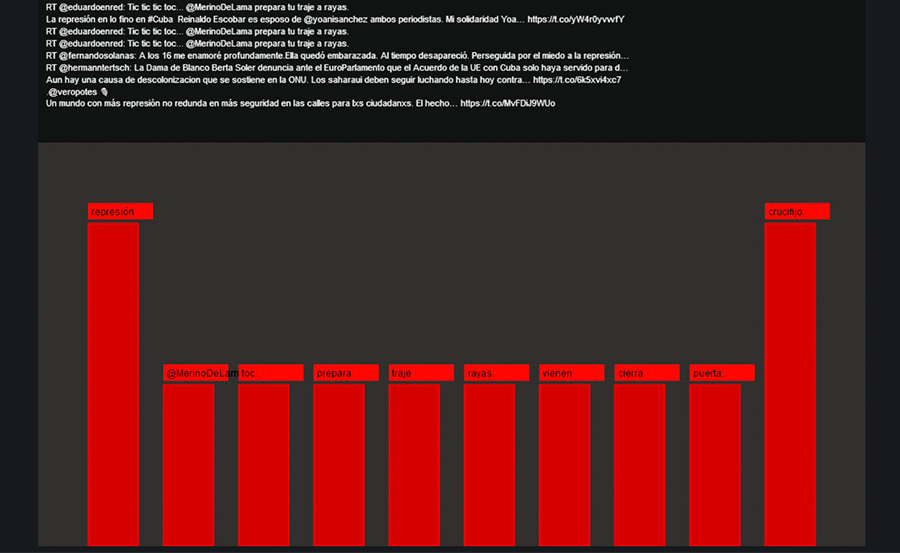
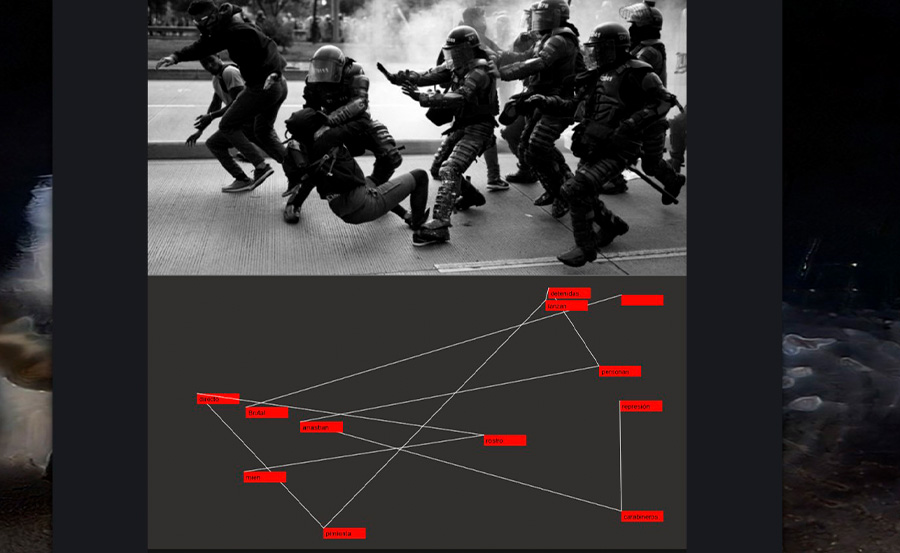
In response to the police violence witnessed not only in Colombia but throughout Latin America, the project "Represión" was created as a gesture to preserve collective memory in the digital age and to make police violence visible in real time by tracking the word "represión" (repression) on Twitter globally. The project proposes new digital artivist tools to continue collective denunciation, promote memory, and break the habit of creating digital repositories of forgetting.
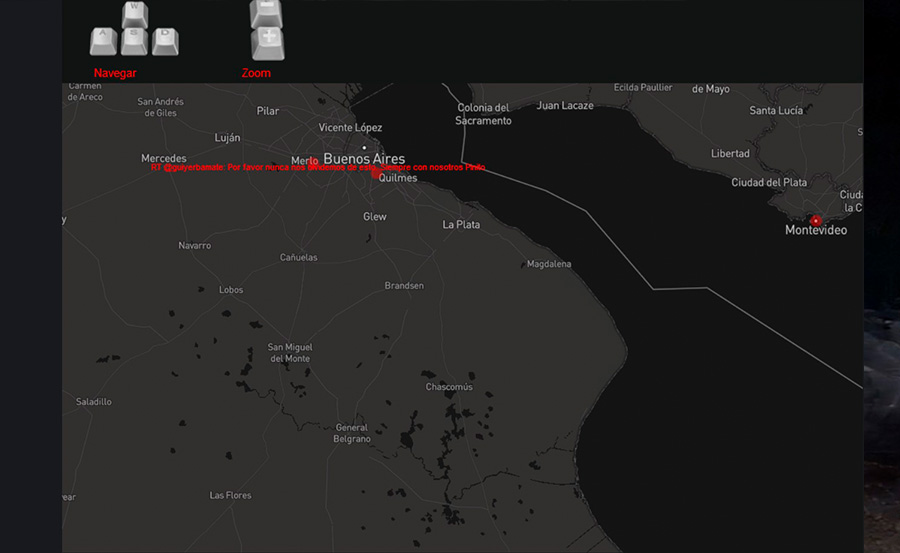
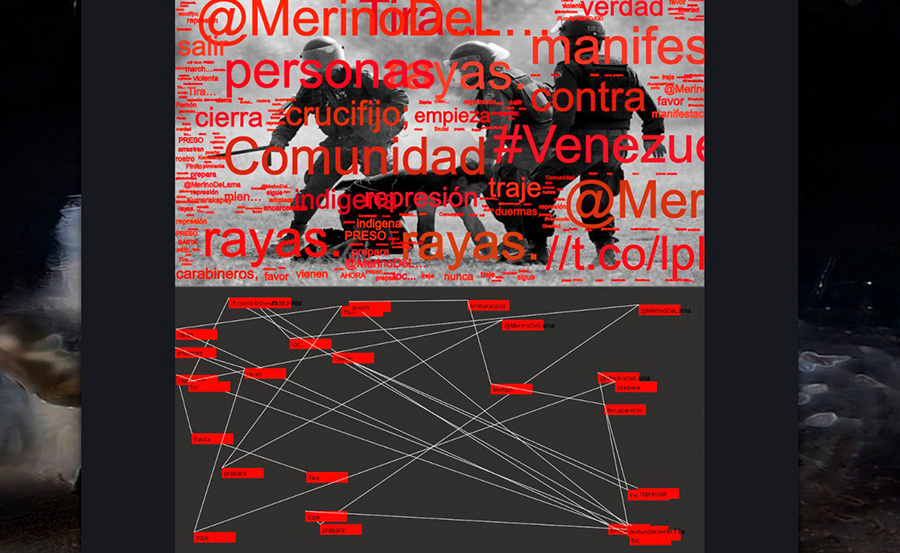
Launched in 2020, the project featured a website that visualized tweets tagged with #Represión in real time. The visualization displayed the geographic location from which each tweet originated and mapped relationships between words within the tweets, revealing which terms appeared most frequently and how they recurred in connection with violent events unfolding across the region.
The project ended in late 2022 to early 2023 following Elon Musk's purchase of Twitter, which resulted in restrictions and the cancellation of free access to the API/web service that had enabled real-time data collection.